Economic •
Environmental •
ESA/NEPA •
GIS Water Analysis
Policy and
Regulatory Issues
Ric quotes:
"Ah, the view to convince the IRS
to view sheds as a taxable value upon lands not owned by
the entity getting the tax benefit .......... the view
to think "I can impose my will, through a CE, upon any
neighbor within my view"
.............. and using your viewshed to stop any
land activity not in align with your view...
• The goal
of the Wildlands Project is to set aside approximately
fifty (50) percent of the North American continent
(Turtle Island) as "wild land" for the preservation of
biological diversity.
•
The project seeks to do this by creating "reserve
networks" across the continent. Reserves are made up of
the following: ◦Cores, created from public lands such as
National Forest and Parks
•
Buffers, often created from private land
adjoining the cores to provide additional
protection
•
Corridors, a mix of public and private lands
usually following along rivers and wildlife
migration routes
•
The primary characteristics of core areas are that they
are large (100,000 to 25 million acres), and allow for
little, if any, human use.
•
The primary characteristics of buffers are that they
allow for limited human use so long as they are "managed
with native biodiversity as a preeminent concern."
•
Moral and ethical
guidelines for the Wildlands Project are based on the
philosophy of Deep Ecology.
•
The eight point platform of Deep Ecology can be
summarized as follows: ◦All life (human and non-human)
has equal value.
•
Resource consumption above what is needed to
supply "vital" human needs is immoral.
•
Human
population must be reduced
•
Western
civilization must radically change present
economic, technological, and ideological
structures.
•
Believers have an obligation to try to
implement the necessary changes.
•The
Wildlands Project itself is supported by hundreds of
groups working towards its long-term implementation.
Implementation may take 100 years or more.
•The
Wildlands Project has received millions of dollars in
support from wealthy private and corporate foundations
such as the Turner Foundation, Patagonia, W. Alton Jones
Foundation, Lyndhurst Foundation, etc.
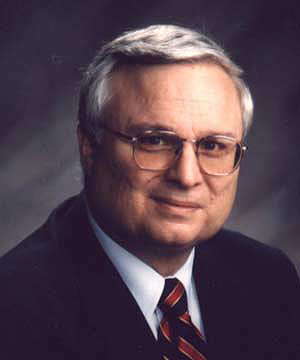
Born in 1943, Dr. Michael S. Coffman received his BS in
Forestry and MS in Biology at Northern Arizona
University at and his Ph.D. in Forest Science at the
University of Idaho at Moscow in 1966,1967, and 1970
respectively. Since then he has become a respected
scientist and ecologist who was involved in ecosystem
research for over twenty years in both academia and
industry.
more
google
Dr.
Coffman is currently President of Environmental
Perspectives, Inc. (EPI), and Executive Director of
Sovereignty International. Dr. Coffman played a key role
in stopping the ratification of the Convention on
Biological Diversity (Biodiversity Treaty) in the U.S.
Senate an hour before the Senate was scheduled to vote
on its ratification.
Dr.
Coffman's newest book:
What
People are Saying About Radical Islam
Book Review:
Coffman’s book is
perhaps the best I’ve read at conveying the reality of
this agenda to impose Shariah law on Americans. At only
about 100 pages, it’s crammed with material that will be
new to most. Interestingly, all through the book, the
author asks a rhetorical question that goes basically
like this: “Why is the Obama administration helping the
Muslim Brotherhood?” The only way we’ll wake up from our
self-imposed slumber and meet this lethal threat is if
we start asking questions like this. For many, the
answer is obvious, and Coffman makes a stone-cold case
for that answer... The great value of “Radical
Islam in the House” is that Coffman clearly
shows the Muslim Brotherhood’s strategy of stealth
takeover is perhaps more clever than al-Qaida’s more
confrontational methods. But they are two sides of the
same coin. Jim Fletcher, Director Prophecy Matters. Read
entire review on
WorldNetDaily.